

As part of its efforts to promote youth exchange between ASEAN countries and Japan through football, J.League once again cooperated with the Ministry of Foreign Affairs’ Japan-East Asia Network of Exchange for Students and Youth Program (JENESYS), following its involvement in 2024.
Under this program, from October 28 to November 4, 88 high school students and supervisors from 11 ASEAN countries —Brunei, Cambodia, Indonesia, Laos, Malaysia, Myanmar, the Philippines, Singapore, Thailand, Vietnam, and Timor-Leste, which officially joined in October 2025—visited Japan.
During their roughly one-week stay, participants attended a J.League lecture on sustainability, and visited blue-ing! (a football culture hub operated by the Japan Football Association), the Japan National Stadium, and Gamba Osaka. These activities provided opportunities to learn about the SDGs-related initiatives and social contribution activities promoted by J.League and J.League clubs.
Lecture: “J.League and Sustainability”
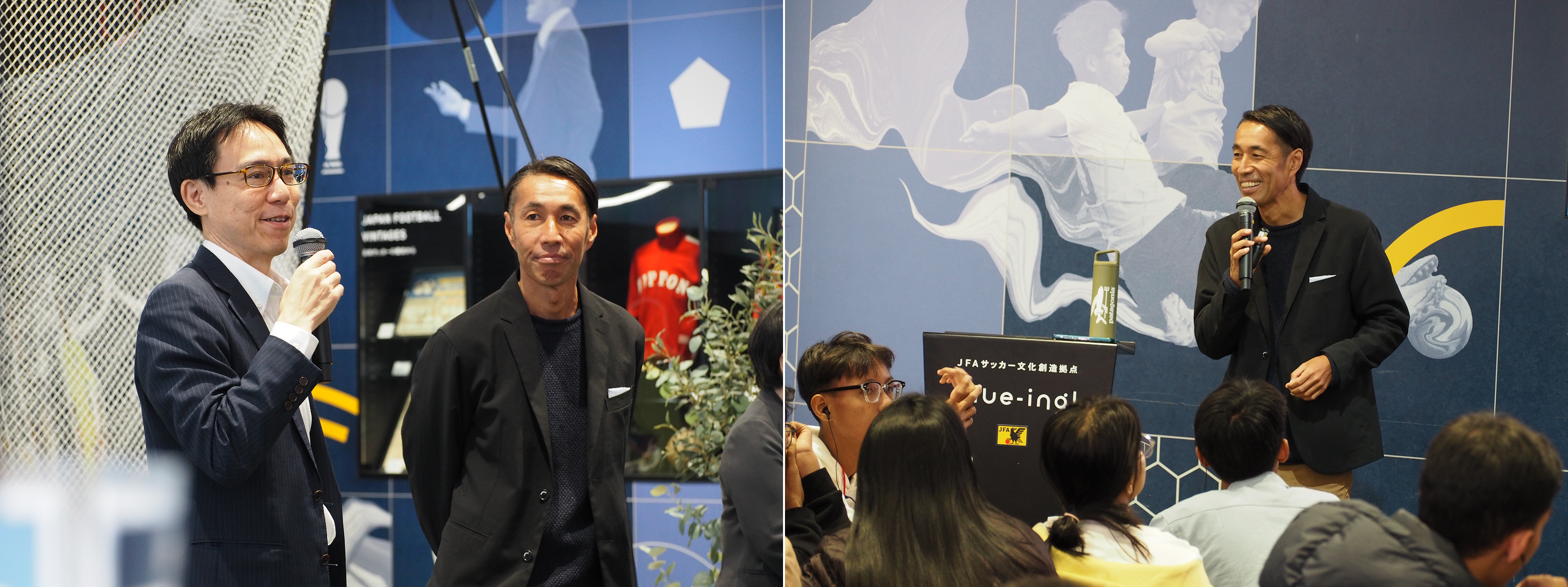
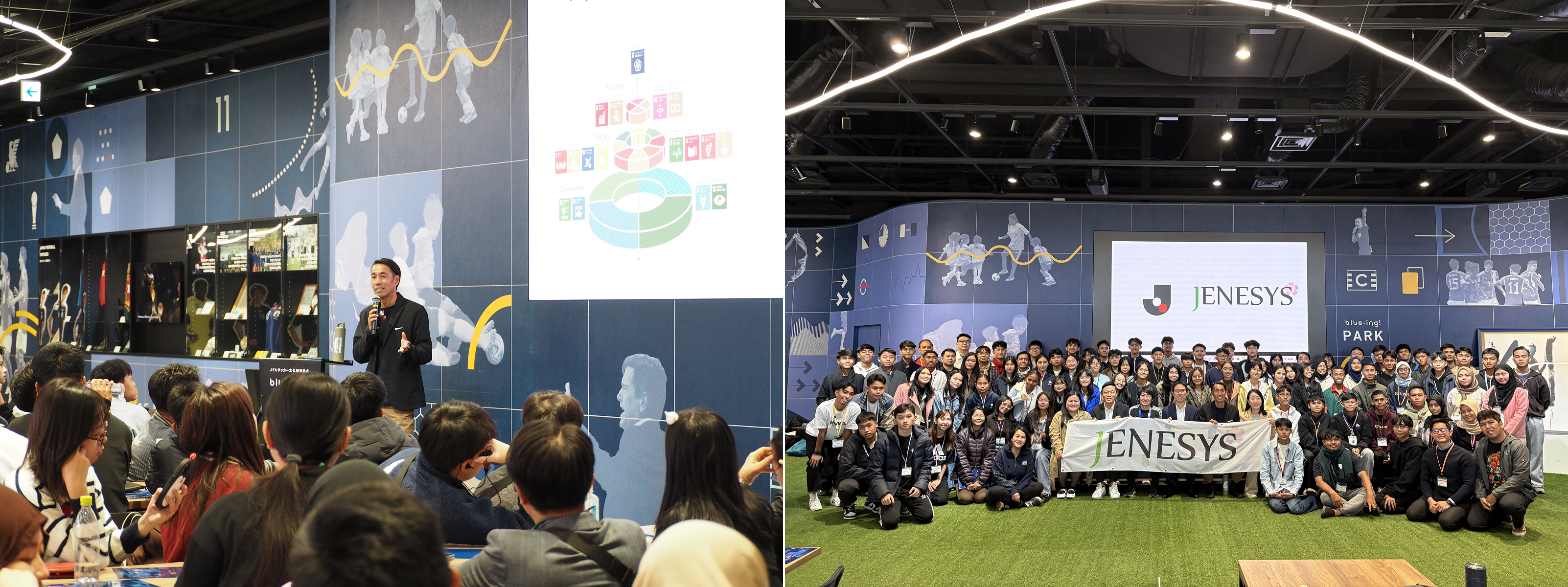
On Wednesday, October 29, J.League Executive Officer Takayuki Tsujii, who oversees the league’s sustainability initiatives, delivered a lecture titled “J.League and Sustainability” at blue-ing!, a hub for football culture.
After participants enjoyed a tour of blue-ing!, the lecture began with an introduction to the J.League’s founding principles, which have remained unchanged since the league’s launch:
- Improving the level of Japanese football and promoting its wider adoption.
- Contributing to the development of a rich sports culture and to the healthy physical and mental growth of the public.
- Promoting international exchange and goodwill.
Tsujii emphasized that opportunities like this—engaging in international exchange with participants from ASEAN countries—are essential to advancing these principles.
He went on to explain how the league has put these principles into practice: Japan’s continued qualification for the FIFA World Cup, and the expansion of the J.League from 10 clubs in 8 prefectures at its founding to 60 clubs in 41 prefectures in its 30th year.
At the same time, he highlighted challenges the league now faces. In recent years, matches postponed due to heavy rain have increased to nearly five times the previous number, showing how significantly J.League is being affected by climate change. Summer heat has also led to more frequent cancellations of football schools. To ensure the continuation of football and preserve environments where local communities can enjoy sports, J.League must strengthen its efforts to address climate change.
Tsujii also spoke about the important role of sports in driving social change. By working together with fans and supporters, the league aims to inspire shifts in awareness and encourage behavioral change among citizens. He presented examples of climate-action initiatives undertaken by clubs across Japan—an area where the J.League’s presence in 60 locations nationwide is a major advantage.
The students listened attentively, and the Q&A session saw many active questions from participants representing various countries. Even after the lecture ended, many students approached Tsujii individually with further questions, demonstrating their strong engagement and enthusiasm.
Participant Voices
● “Before joining the program, I thought sports had little to do with climate change. But after hearing the inspiring presentation on how Japanese football integrates the SDGs into its activities, my perspective completely changed.” (Vietnam)
● “I realized that sports have the power to encourage sustainability by influencing people’s awareness and actions.” (Laos)
● “I was deeply impressed by the innovative environmental solutions adopted by football clubs—such as the use of renewable energy, waste reduction, and the promotion of eco-friendly stadiums.” (Indonesia)
“We also had the opportunity to learn about gender equality in sports. It was meaningful to see how Japan is working to ensure equal opportunities for everyone in football. This session was eye-opening and truly motivating for the future.” (Vietnam)
Lecture, Tour, and Activities: Gamba Osaka
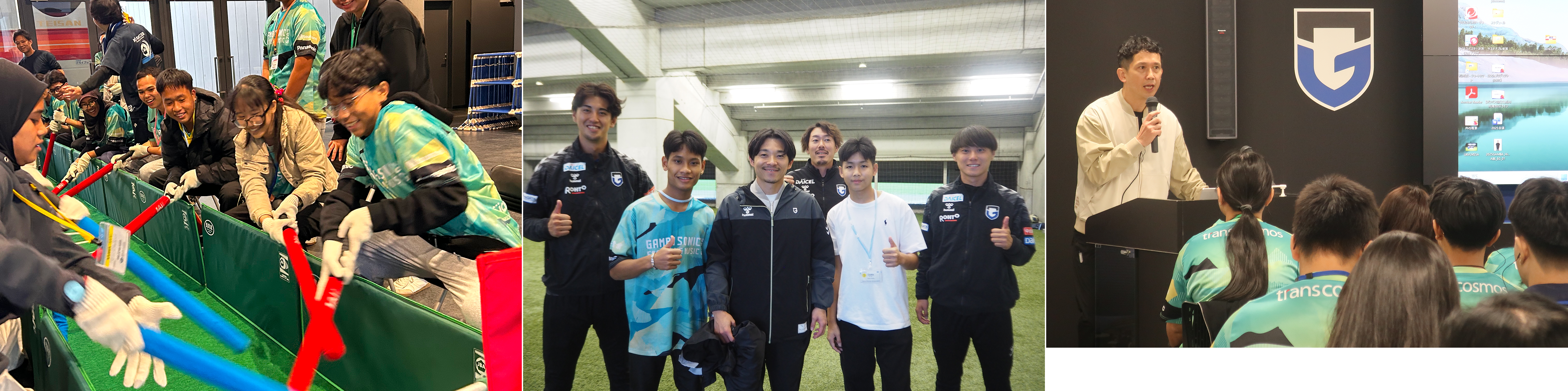
On Friday, October 31, participants visited Gamba Osaka. During the lecture on the club’s SDGs-related initiatives, participants learned about Gamba Osaka’s commitment to its community-based philosophy and concrete examples of how the club contributes to society through sports.
During the stadium tour, the group explored behind-the-scenes areas of an actual match venue, experiencing the atmosphere of professional sports firsthand. They were particularly impressed to learn that the stadium is designed with environmental considerations in mind, and also functions as a disaster-response hub. Another point that drew many surprised reactions was the story of how the facility was funded through donations from fans, supporters, and local residents.
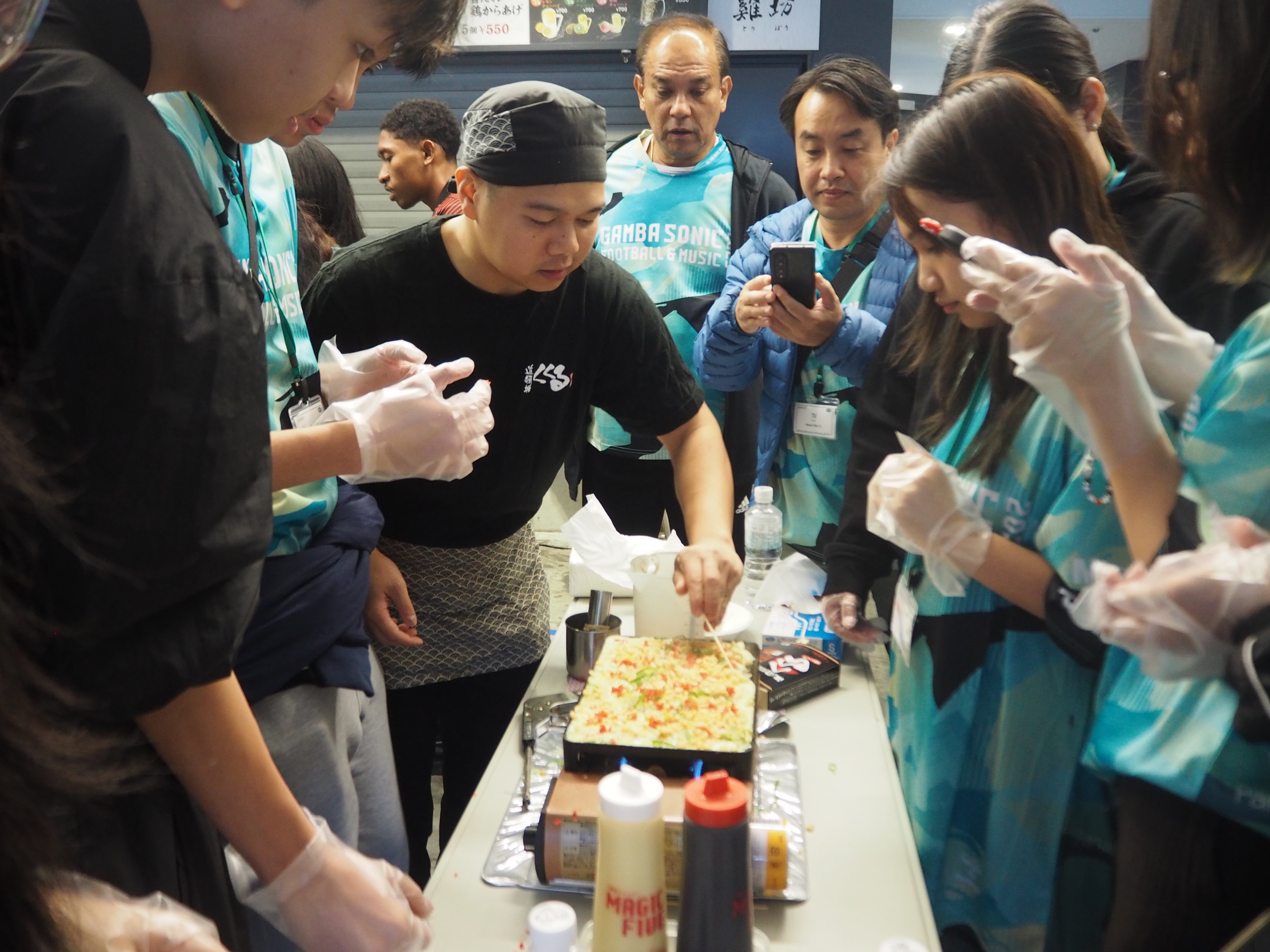
With support from a club partner, participants also had the opportunity to try making Takoyaki, giving them a taste of Kansai culture.
After the Takoyaki session, the group took part in stick soccer and walking football. Before playing, they received an explanation of universal sports and their connection to the SDGs, and then challenged themselves to the games. This provided a valuable experience in learning how sports can be enjoyed regardless of age or physical ability.
Throughout the day, participants gradually bonded as they joined activities in mixed teams made up of members from different countries. By the end, many were enjoying the sessions together with smiles on their faces.
Reference article available on the Gamba Osaka official website.
(link:https://www.gamba-osaka.net/news/index/no/19316/ )
Participant Voices
“I thought the kids’ football classes and the activities visiting areas affected by earthquakes that were introduced in the lecture were wonderful. I felt they were delivering hope, support, and strength to other people.” (Laos)
“I was most impressed by how Gamba Osaka uses its influence to support the environment and the local community. I also felt the greatness of sports and the club’s strong consideration for society, such as through safety functions like earthquake resistance.” (Timor-Leste)
“What left the strongest impression on me was the stadium tour. The more we explored, the more ideas related to the SDGs we discovered! I was especially moved by the system that collects rainwater for the toilets and by the installation of child seats in the restrooms.” (Laos)
“I felt that universal sports hold great potential for inclusivity, engaging people from many different backgrounds.” (Singapore)
“I was really able to enjoy the games together with friends from other countries, and today was truly a fun day! I learned forms of both verbal and non-verbal communication.” (Thailand)
“I was very happy to be able to visit Gamba Osaka and Panasonic Stadium Suita today. Truly, truly happy. Experiencing how to make Takoyaki and playing walking football together in groups helped us build relationships that transcend national borders.” (Timor-Leste)
“I was so happy to participate in Gamba Osaka’s activities! The energy on the field was amazing, and being surrounded by people who share the same passion for football was the best. Playing universal sports together, cheering, and laughing made it an unforgettable day.” (Cambodia)
“Mr. Hiroyuki Abe, a Gamba Osaka alumnus and former member of the Japan national team, joined us, and he had an overwhelming and dignified presence. Being able to spend time with someone who represented his country as an athlete became truly a once-in-a-lifetime experience for me.” (Philippines)
“It was a very inspiring day. I want to improve my sports skills so that I can contribute to my community in the future. I hope that Gamba Osaka will achieve all of its SDGs goals someday!” (Philippines)
Comment from Toru Matsuoka, Business Division, Gamba Osaka Co., Ltd.:
“Once again, I realized that sports have the power to bring people closer together across countries and languages. This was our first time hosting the JENESYS program, but we now understand that we can handle programs aimed at international participants, so if the opportunity arises, we would like to continue doing this in the future. We also hope to make exchanges with Gamba Osaka’s youth players possible going forward.”
J.League YBC Levain Cup Final: Tour and Match Experience
On Saturday, November 1, as the final program activity, the participants toured and watched the J.League YBC Levain Cup Final.
After arriving at the Japan National Stadium, the venue for the match, the participants first toured the Sustainable Station set up outside the stadium. The participants listened to the explanation given in front of the Sustainable Station and were seen proactively asking questions to the staff. Some participants even mentioned that they wanted to collect clothing after returning to their home countries and donate them to people in need, showing their eagerness to learn from the initiatives the J.League carries out through sports and put them into practice themselves. They also visited the Fair Play Booth located next to the Sustainable Station and received an explanation from the staff about the spirit of fair play that the J.League values and its related promotional activities.
Related article: “Sustainable Actions at the 2025 J.League YBC Levain Cup Final!”
(link: https://www.jleague.jp/climateaction/report_sustainable_action/leaguecup.html/)
Finally, it was time for the long-awaited match. For many participants, this was their first time watching a professional football game. They enjoyed the passionate match along with the atmosphere of the packed stadium, the choreographed displays by each club, and the supporters’ cheering.
Participant Voices
“I was able to gain experience and knowledge by seeing with my own eyes how football in Japan contributes to the environment, such as collecting used books and donating food at the Sustainable Booth.” (Cambodia)
“I was very moved by the Sustainable Booth before the match, especially the recycling projects for books and clothing. I was deeply touched to learn about the system in which used books are repaired by people with disabilities, sold online, and used to raise funds. I think this creates a wonderful cycle of sustainability and community support.” (Timor-Leste)
“What left the strongest impression on me was the Sustainable Booth outside the stadium. I was moved by the idea that small actions can help people, and I realized that even if something is not a big deal for me, it can have a huge impact on someone else’s life.” (Laos)
“It was my first time seeing a real match in a stadium, so it became an unforgettable experience. I felt the passion of the fans and the excitement of the players, and I understood how passionate Japanese football culture is.” (Myanmar)
“The finals I know are usually filled with tension, but what I saw today was the beautiful spirit of support from both teams. I was moved by how both the players and the fans showed respect for each other.” (Philippines)
“I was impressed to see female security staff actively working, and I felt that men and women can be active in the same space.” (Indonesia)
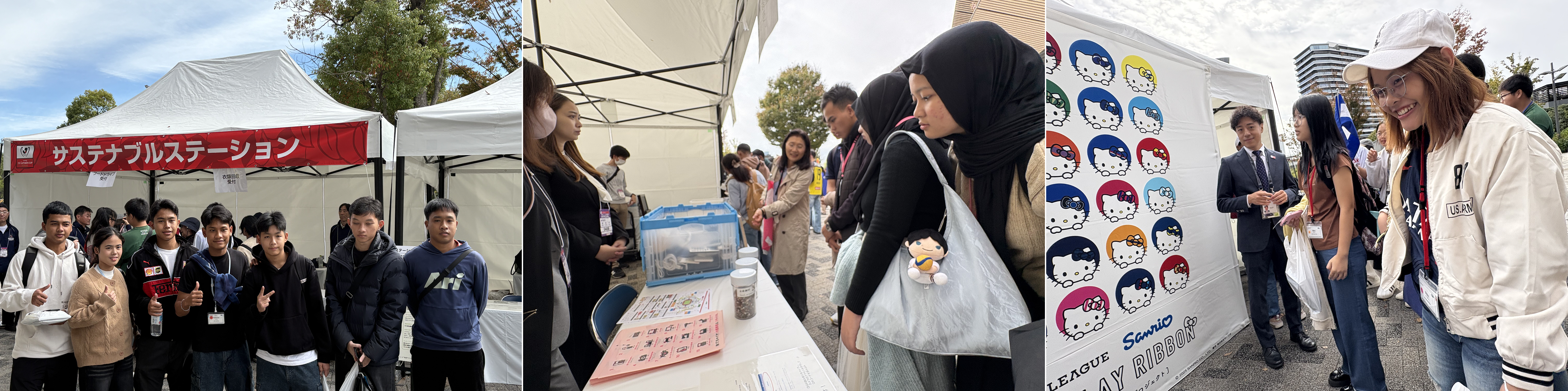
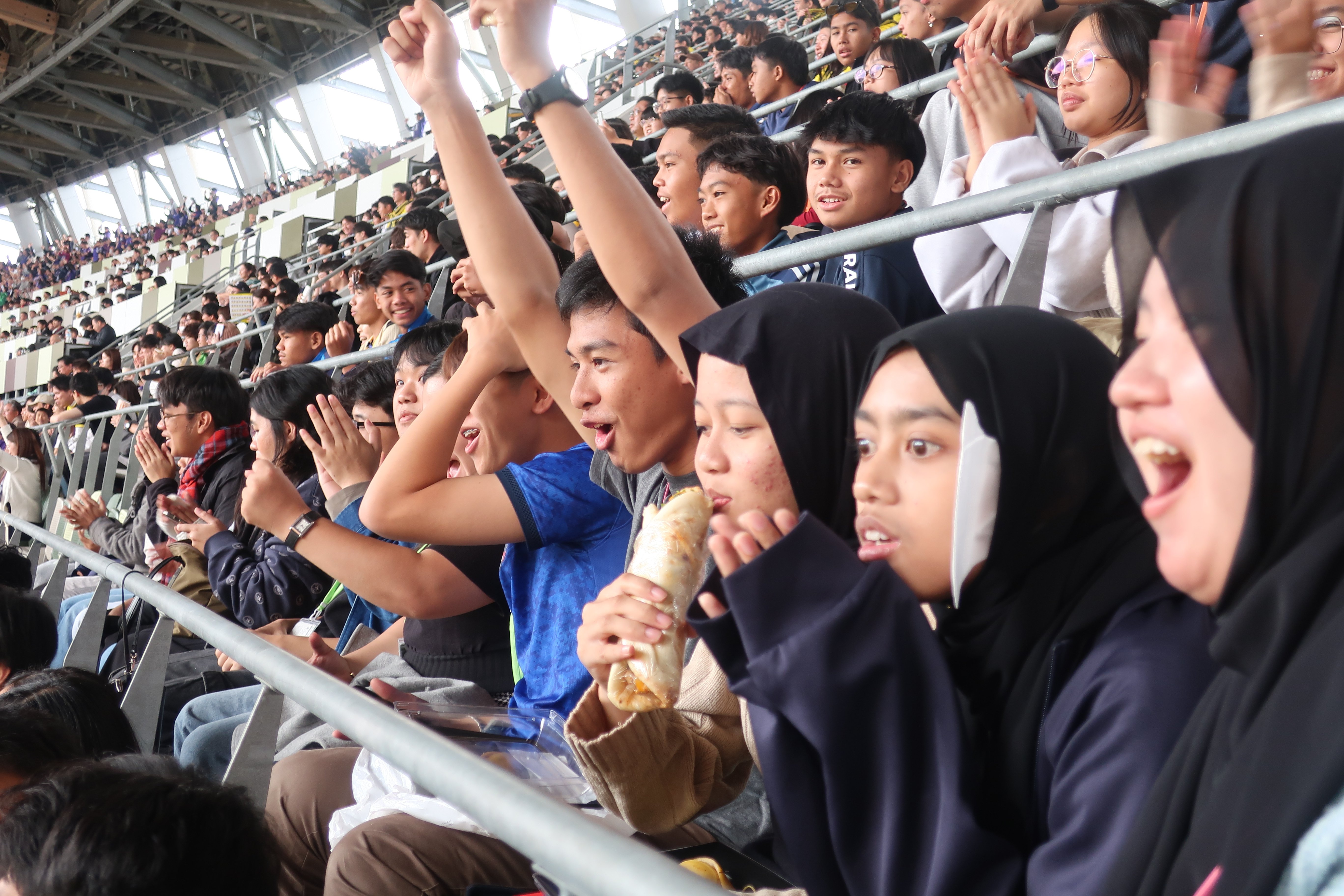
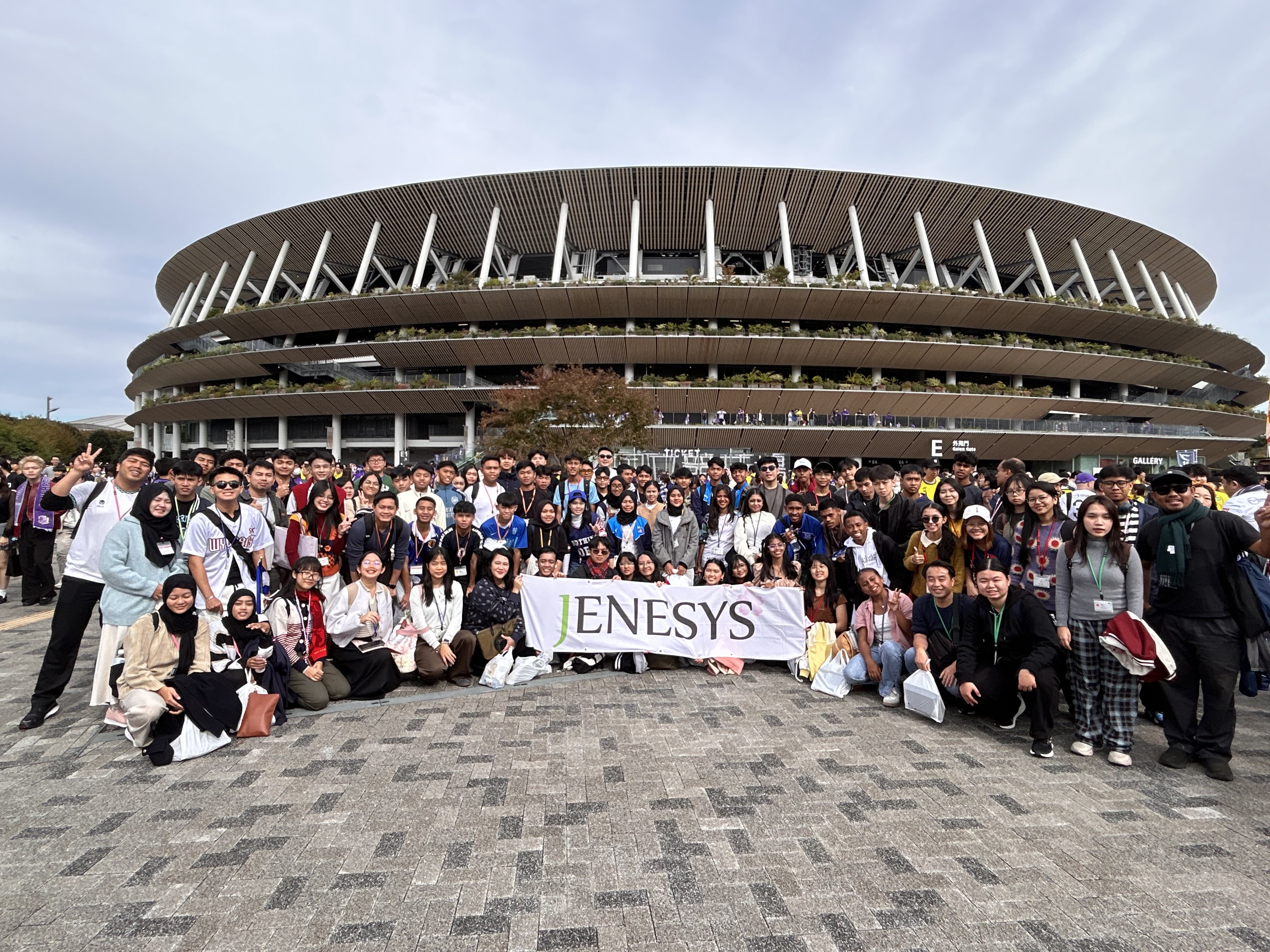
Photo credit: Japan International Cooperation Center (JICE)
[Japan Friendship Ties Program “JENESYS”]
● Purpose
High school students and others from ASEAN countries will connect with local communities in Japan through soccer and raise awareness toward achieving the SDGs. The program also aims to promote contributions to local communities, deepen understanding of Japanese culture, and, through international exchange, foster mutual understanding and strengthen friendly relations.
● Period
Tuesday, October 28, 2025 – Tuesday, November 4, 2025
● Participants
Seven high school students and one supervisor from each ASEAN country.
Total: 88 participants.
● Locations Visited
Tokyo, Osaka● Program (partial)
● Lecture by J.League Executive Officer Takayuki Tsujii (in charge of Sustainability)
● Visit to the JFA Soccer Culture Creation Hub “blue-ing!”
● Visit to Gamba Osaka (stadium tour, walking football, stick soccer experience, etc.)
● Visit to the Japan National Stadium
■ Overview of the “JENESYS” Program
“JENESYS” is a people-to-people exchange program promoted by the Government of Japan (Ministry of Foreign Affairs) between Japan and the countries/regions of the Asia-Pacific. Through this program, the objectives are to expand interest, understanding, and support for Japan among young people from abroad, strengthen their outward communication about Japan, and enhance the foundation of Japan’s diplomacy.
● Website: Ministry of Foreign Affairs official website
https://www.mofa.go.jp/mofaj/a_o/rp/page24_001716.html
● Implementing Organization:
Japan International Cooperation Center (JICE)
https://www.jice.org/
Photo: Japan International Cooperation Center (JICE)